


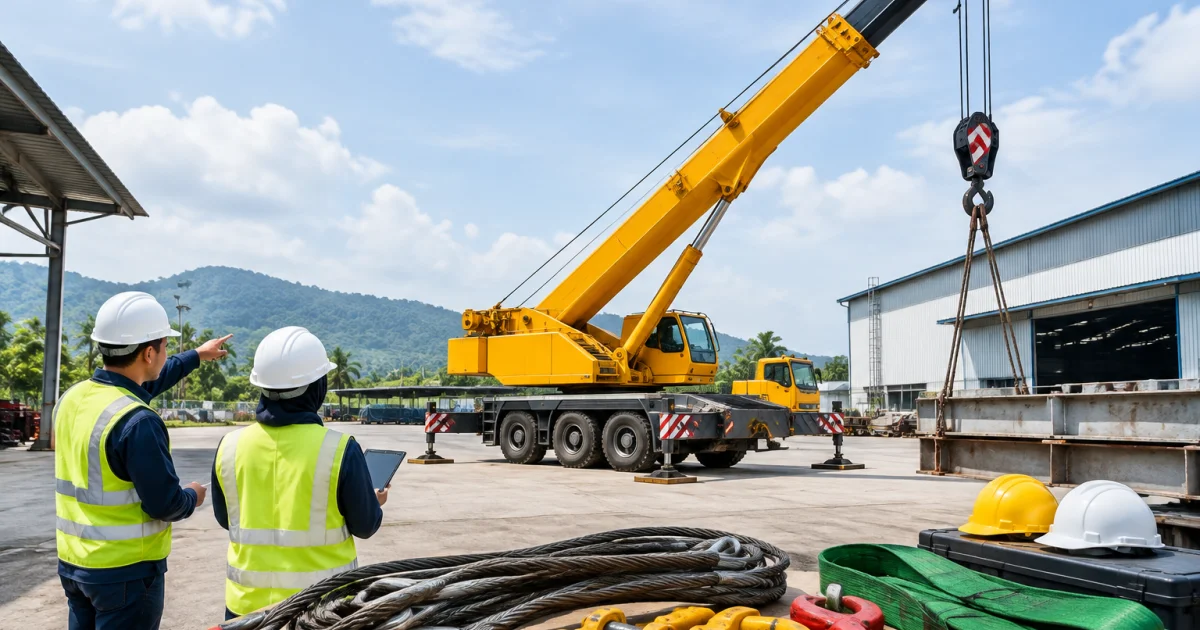
Choosing the wrong crane can cause delays, extra mobilisation costs, and safety risks. If you’re booking Crane Kulim services for the first time, the “right crane” isn’t only about tonnage—it depends on radius, hook height, boom type, ground conditions, setup space, and rental terms that affect your schedule.
This guide helps you gather the right lift details, understand common crane/boom options, and confirm rental terms that matter on real industrial sites around Kulim (tight yards, limited access, restricted hours).
Start with the lift plan: what you’re lifting, where, and how far
Before contacting a crane provider, compile consistent lift information so they can recommend the correct crane class and configuration.
- Load weight: include the item plus lifting beams, spreaders, and any special frames.
- Pick and set locations: where the load starts and lands (include landing height).
- Working radius: horizontal distance from crane center to the load—often the main limiting factor.
- Hook height: required hook height including load height and rigging length.
- Site access and setup space: road width, turning room, overhead obstructions, and outrigger/track footprint.
- Ground condition: slab/soil, uneven areas, drains, underground services.
- Time window: shutdown hours, weekend/night work, delivery timing.
Key concept: a crane’s “capacity” changes with radius and configuration. A 50-ton crane does not lift 50 tons at every radius, so accurate radius/height inputs are essential.
Choosing the right crane capacity: think in radius and configuration
Rated capacity depends on boom length, counterweight, outrigger extension, and the working radius. To avoid re-planning, use this practical process:
- Verify load weight from drawings, packing lists, or nameplates (avoid guessing).
- Identify your maximum radius based on where the crane can realistically set up (outside buildings, beyond drains, restricted zones).
- Add rigging weight (slings, shackles, spreaders)—it counts in the lifted load.
- Leave margin: choose a crane that can lift comfortably at the required radius, not at the edge of the chart.
Your provider will check load charts and propose a configuration. Clear, accurate inputs help them quote the right equipment the first time and reduce standby time.
Mobile/rough terrain cranes vs crawler cranes: how capacity plays out
Kulim industrial projects often use mobile/rough terrain cranes for quick mobilisation and short, scheduled lifts. Crawler cranes are commonly chosen for uneven ground, longer site duration, or lifts that need steadier performance at larger radii.
- Mobile & rough terrain cranes: fast to mobilise; ideal for multiple short lifts; need firm ground and sufficient outrigger space.
- Crawler cranes: strong stability on uneven ground; suitable for heavier lifts/longer durations; mobilisation and assembly can take more time depending on size.
If your lift is “heavy and far” (large radius) or the ground is challenging, discuss crawler options early. Tw Dynamic offers crawler crane rental options in 55-ton and 80-ton classes (among other lifting solutions): Crawler Crane.
Boom types explained: which boom is right for your job?
Boom selection affects reach, positioning, and how easily you can work around obstacles. “Longer” isn’t automatically better—match the boom to the lift path and site constraints.
Telescopic boom (common on mobile cranes)
Telescopic booms extend in sections, making them versatile for changing heights and radii during a shift.
- Good for frequent adjustments between lifts
- Flexible reach without swapping boom sections
- Efficient for short project windows and road-accessible sites
Lattice boom (common on crawler cranes)
Lattice booms use truss sections and typically perform well at longer radii, but require more setup and transport planning.
- Stronger performance when radius is large
- Often practical when the crane stays on site longer
- Works well when site layout favors crawler stability and travel
When a lorry crane is the better fit
For lighter loads where you also need transport, a lorry crane can handle delivery and placement in one trip—reducing coordination between a separate lorry and crane.
- Best when weight is moderate and radius from the truck position is manageable
- Requires adequate outrigger space
- Ideal when transport and lifting must happen together
Related reading: How Lorry Cranes Make Construction Projects In Penang Easier.
Site conditions in Kulim that affect crane choice (and cost)
Two lifts with the same load weight can require different cranes due to site constraints. These factors often drive both equipment selection and rental terms.
Ground bearing and outrigger support
Outriggers apply high point loads. If you’re near slab edges, drains, or underground services, you may need mats/steel plates, a revised crane position, or a different crane type. Flag ground concerns early so the provider can plan safe support and outrigger spread.
Access roads, turning space, and overhead obstructions
Narrow access, parked trailers, cable trays, and piping can limit setup positions, forcing a larger radius and reducing chart capacity. A site visit—or clear photos/video with measurements—helps prevent last-minute crane changes.
Work-at-height: when a skylift or forklift reduces crane time
Crane time is valuable. If you use a crane for tasks better handled by other equipment, your lift window expands and costs rise.
- Skylift: better for access-focused work like maintenance, façade tasks, signage, and some M&E installation.
- Forklift: faster for pallets, crates, and skidded equipment movement within factories/warehouses.
Forklift options: Forklifts.
Rental terms beginners should understand before confirming a booking
Pricing isn’t only the daily rate—terms determine what happens when deliveries slip, re-rigging takes longer than expected, or site access is delayed.
Rental duration: half-day, full-day, weekly, or project-based
Confirm how a “day” is defined (fixed hours vs calendar day), the start/end time for shutdown windows, and what applies if the job runs over due to site delays.
Mobilisation, demobilisation, and standby time
Logistics can drive a large share of cost. Clarify what’s included:
- Transport to site and return
- Assembly/disassembly (if applicable)
- Operator and any standard rigging support (if provided)
- Standby rates if the crane is waiting due to site readiness
To reduce standby, prepare the site: clear setup area, mark exclusion zones, ensure the load is ready, and keep the lift path unobstructed.
Operator, lifting supervisor, and signalman: clarify roles
Depending on the lift risk and site rules, you may need a lifting supervisor and a competent signalman/rigger. Confirm who supplies each role, communication method (hand signals/radio), and stop-work authority if conditions change.
Insurance, permits, and site rules
Some sites require inductions, escorts, specific PPE, or restricted hours. Confirm document/permit responsibilities and lead times so the crane doesn’t arrive but cannot start.
What information should be in the quotation?
- Crane type and capacity class (plus key configuration assumptions)
- Rental duration and included hours
- Mobilisation scope and assumed access conditions
- Included manpower (operator, rigger/signalman, supervisor if applicable)
- Overtime/standby rates and triggers
If it’s not written, ask before mobilisation.
A simple step-by-step checklist for your first crane rental in Kulim
- Define the lift: weight (plus rigging), dimensions, pick/set points, required hook height, and maximum radius.
- Assess the site: access, setup footprint, ground condition, overhead obstructions, and nearby operations.
- Choose the likely crane category: mobile/RT for quick scheduled lifts; crawler for uneven ground/heavier radii; lorry crane for lighter lifts with transport needs.
- Confirm the schedule: date, time window, and what happens if delivery is late.
- Align responsibilities: supervision, rigging, and signalling roles and communication.
- Review terms: included hours, standby/overtime, mobilisation, and entry documentation.
- Final readiness check: clear/cordon area, prepare mats/plates if needed, confirm load access.
Conclusion: choose a crane that fits the lift—not just the tonnage
The fastest way to get crane rental right in Kulim is to plan around capacity at your required radius, select a boom type that suits the lift path, and lock in rental terms that match real site conditions. With clear lift details and constraints, a provider can recommend the right crane configuration, minimise standby, and help you complete the lift safely and efficiently.
If your job includes more than the main lift day, plan supporting equipment early (such as a forklift for internal movement or a skylift for access work) to keep crane time focused and predictable.
Frequently Asked Questions
How do I estimate what crane capacity I need for a lift in Kulim?
Start with accurate load weight (including rigging), then determine the maximum working radius and required hook height. Capacity depends on radius and crane configuration, so provide these details to the rental provider so they can check load charts and recommend a crane that can lift comfortably at your required radius.
What’s the difference between a mobile crane and a crawler crane for industrial sites?
Mobile and rough terrain cranes mobilise quickly and suit short, scheduled lifts where the ground can support outriggers. Crawler cranes are often chosen for uneven ground, longer project durations, or heavier lifts at larger radii, where stability and consistent lifting performance are priorities.
When should I use a lorry crane instead of booking a larger mobile crane?
A lorry crane can be a good fit when the load is relatively light, the working radius is manageable, and you want transport and lifting handled together. If the lift needs a long radius, higher hook height, or tighter capacity margins, a mobile or crawler crane is usually more suitable.
What rental terms should I confirm before finalising a crane booking?
Confirm rental duration and included working hours, mobilisation/demobilisation scope, standby and overtime charges, manpower included (operator, signalman/rigger, lifting supervisor if required), and site entry/documentation requirements. Clear terms reduce surprises if the site is not ready or the schedule changes.
I saw searches for other crane companies (for example, Yit Leong). How should I compare providers?
Compare providers based on suitability for your lift (capacity options and crane types), equipment condition and maintenance practices, ability to support your schedule (mobilisation and responsiveness), and clarity of rental terms. The best choice is the provider that can safely meet your radius/height requirements with a realistic plan and clear responsibilities on site.
Need help choosing the right crane for your Kulim lift?
Tw Dynamic supports industrial and construction lifting with a wide fleet—mobile & rough terrain cranes, crawler cranes, lorry cranes, as well as forklift rental and skylift rental when your project needs more than just a single lift. Share your load weight, radius, height, and site constraints, and our team can help you shortlist a practical crane capacity, boom setup, and rental arrangement that fits your schedule.